Intimacy and Connection
Dead Bedroom: What It Actually Feels Like, Why It Happens, and What Helps
An honest look at the dead bedroom dynamic in long-term marriages. What makes it specifically hard, why it develops in good marriages, what's recoverable, and what actually helps.
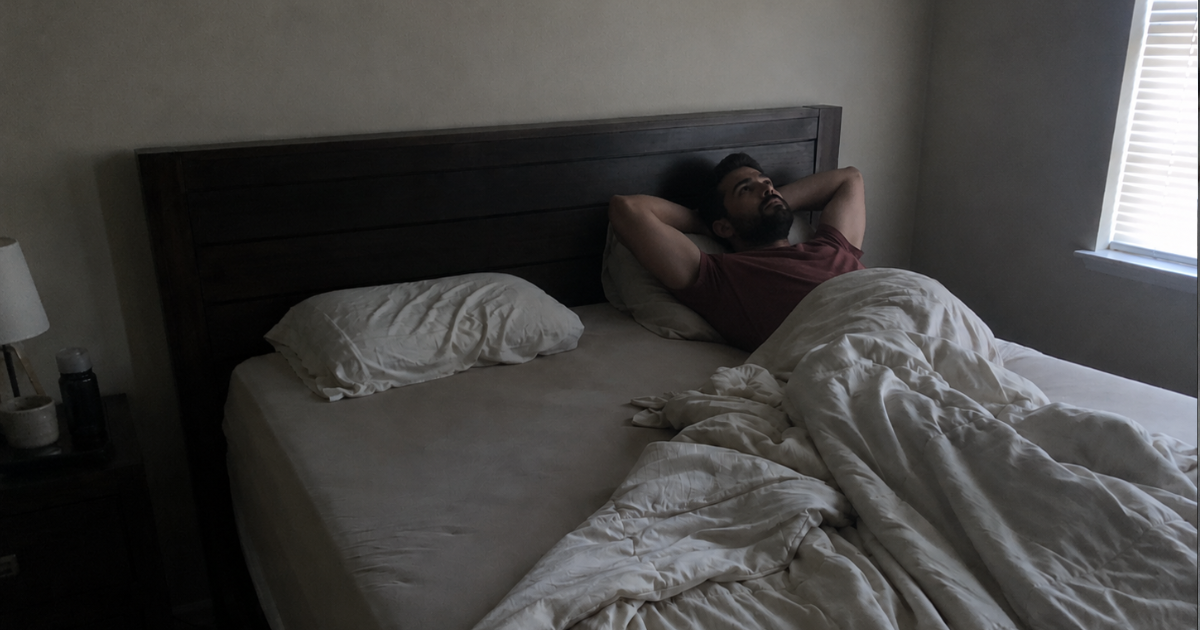
If you found this article, you already know what a dead bedroom is. You're probably not here for a definition. You're here because you're in one, or you suspect you are, and you've spent enough time on Reddit threads and late-night searches to know the term, the patterns, and the particular kind of loneliness that doesn't have a name in the rest of your life.
This article isn't going to explain the term to you or tell you what you already know. What it's going to try to do is name some of the specific things that make a dead bedroom uniquely hard, talk honestly about what causes them, and lay out the paths forward that have actually worked for people in this situation. Not the therapeutic platitudes you've already read. The real things.
A few honest things up front. There's no five-step plan that fixes a dead bedroom. Anyone who tells you there is hasn't been in one. The situation has been building for months or years, and the unwinding takes time and care. What there is, instead, is a clearer way of thinking about what's actually happening, what's recoverable, and what to try first. That's what's below.
What's specifically hard about being in a dead bedroom
The hardest part isn't the absence of sex. It's the loneliness inside the marriage, the self-doubt that grows in the silence, and the fact that there's nowhere to talk about any of it. The standard articles about sexless marriage tend to focus on the absence of sex as the central problem. That absence is real, but the harder parts are quieter and less talked about.
The loneliness inside the marriage. This is the one that's hardest to explain to people outside the situation. You're sharing a home, a bed, sometimes children, sometimes decades of history with another person. By every external measure, you're not alone. But the specific kind of intimate companionship that's supposed to be part of marriage isn't happening, and that absence has its own shape. You can be in a room with your spouse and feel more alone than you would if no one were there.
The slow erosion of self-perception. Being repeatedly turned down, or repeatedly being the one who turns down, changes how you see yourself over time. The partner who keeps trying starts to feel undesirable, unwanted, foolish for trying. The partner who keeps declining starts to feel guilty, defective, or trapped. What that inner experience looks like for the partner who keeps declining is its own subject. Neither of you intended this, but the dynamic does real damage to both people's sense of themselves as desirable and as partners.
The exhausting math of every interaction. In a healthy bedroom, physical interaction is mostly automatic. In a dead bedroom, every touch becomes calculation. Is this a hug or an invitation? Did they mean to turn away or was I imagining it? Should I try tonight or wait until the weekend? How long has it been? Couples describe this as one of the most depleting parts of the situation, and it doesn't ever fully turn off.
The particular cruelty of being told no by someone you love. This isn't the same as a stranger rejecting you. The person turning you down is the person who chose you, who built a life with you, who knows you better than anyone. When they say no, especially over and over, the message lands in a place that no other rejection can touch. It's not "I don't want this," it's "I don't want this from you," and after enough times that becomes harder to recover from.
The resentment that builds in both directions. The partner who wants more starts resenting being made to feel needy, demanding, or pathetic for wanting basic intimacy with their spouse. The partner who wants less starts resenting being made to feel like an inadequate spouse, or like every touch is a transaction. Both partners are usually trying to be patient and loving; the resentment builds anyway, because the situation isn't sustainable as it is.
The shame that keeps people silent. Dead bedrooms are everywhere, but they're talked about almost nowhere. Couples in this situation often don't tell their closest friends. They don't tell their families. They sometimes don't tell their therapists. The silence makes the loneliness worse, because everyone in the situation thinks they're the only ones, when research on US couples shows that sexual frequency has been declining for years, with the lowest frequencies in longer-term relationships. The privacy is real; the rarity is not. The loneliness of carrying all of this, and what it costs over time, is looked at directly in an honest account of the specific pain of living inside a sexless marriage.
If you recognize yourself in any of these, you're not making it up, you're not being dramatic, and you're not alone. That recognition is itself the first useful thing this article can offer.
Why dead bedrooms develop in good marriages
The dead bedroom subreddit and the broader online discourse are full of stories where the situation arose in marriages that were otherwise loving and functional. This isn't an accident. The dynamic doesn't require a bad marriage; in fact, it's often easier to slide into in a good one, because the absence of conflict gives the silence room to grow.
A few common patterns, in no particular order. Most couples in a dead bedroom have multiple of these running at once.
The reactive desire shift. Many people, especially as marriages mature, shift from spontaneous desire (wanting sex in response to attraction or thought) toward reactive desire (wanting sex only after physical or emotional context has built up). When one partner is mostly spontaneous and the other is mostly reactive, the reactive partner stops initiating because they don't feel the desire spontaneously, and the spontaneous partner stops initiating because they're tired of being the only one trying. Both partners may still want sex; the architecture of how they get to it has stopped working.
The medication and hormone shifts that nobody talks about. SSRIs, hormonal birth control, blood pressure medications, hormonal changes in pregnancy and postpartum, perimenopause, andropause. Any of these can dramatically affect desire and arousal, and the changes often happen quietly without the affected person noticing the pattern. The other partner can spend years thinking "they don't want me anymore" when the underlying issue is biochemistry that's never been named.
The post-conflict shutdown that never fully resolved. A specific fight, a betrayal, a painful conversation, a hard medical situation: any of these can interrupt a couple's sexual rhythm. The crisis gets handled. But the intimate channel doesn't naturally come back online once the crisis is over, and the couple often doesn't realize that restoring it requires deliberate effort. The original wound becomes invisible; the dead bedroom that grew from it becomes the situation.
The mismatched expectations that were never named. Many couples enter long-term partnership with significantly different baseline desire levels, but the difference doesn't matter much in the early years when frequency is naturally higher. When life pressures bring the floor down, the gap between the partners becomes the dominant feature. Neither partner is wrong; they're mismatched, and the mismatch was always there.
The accumulated grievance load. Long marriages collect grievances. Most healthy couples process them as they arise. When they don't get processed, they accumulate in the body and the mind, and they show up in the bedroom long before they show up in conversation. A partner who's quietly angry about how the household labor is divided, or who feels unseen, or who's nursing an old wound, often loses sexual interest as the first symptom. Fixing the bedroom requires fixing the grievance, and the grievance is often not visible to the other partner.
The pattern of trying, failing, retreating. This is the specific dead-bedroom mechanic that hurts both partners most. One partner initiates. They're turned down, for whatever real reason. They try again next week, or next month. Turned down again. After enough cycles, they stop trying, both to protect themselves and because the cost of being told no has become higher than the value of asking. The other partner doesn't notice the initiation stopping at first, then notices it, then doesn't know how to invite it back, then becomes complicit in the silence. The dead bedroom is now stable. Both partners may want it to end, and neither knows how to undo what's been built up. Part of what made it stable was how the architecture of asking changed under repeated rejection, in ways that both partners can learn to understand and work with differently. What that pattern did to the partner who kept doing the trying, from the inside, is its own story.
None of these causes are character flaws. All of them are predictable outcomes of being two people whose lives and bodies and hearts changed over a long time. The dead bedroom isn't a moral failure; it's a system that drifted out of equilibrium without anyone steering it that way.
What's actually recoverable
This is where most articles either lie or oversimplify. Honest version:
Some dead bedrooms come back fully, with both partners eventually wanting and enjoying each other again. This usually requires real work from both people, often including professional help, and often takes longer than couples expect.
Some dead bedrooms reach a new equilibrium that's not the original passion but is genuinely good. Partners find a level and rhythm that works for both of them, even if it's different from what either imagined when they were younger. This is more common than full restoration and is a legitimate good outcome.
Some dead bedrooms don't recover, and the couple eventually faces a harder decision about whether to stay together with that absence as a permanent feature, to renegotiate the marriage in some structural way, or to part. This outcome is real and shouldn't be denied. The articles that pretend every dead bedroom is fixable are doing damage to the couples for whom that turns out not to be true.
What's worth saying: most couples who actively work on a dead bedroom land somewhere in the first two outcomes. The couples who don't see improvement are often the ones who never named the situation, never sought outside help, and never deliberately tried to change the dynamic. Doing nothing produces a much worse trajectory than doing something imperfect.
The path forward almost always starts with naming what's happening. Not solving it, not fixing it, just saying out loud, to each other, that this is the situation you're in. That conversation is harder than it sounds, and it's the threshold most couples can't cross alone.
What to actually try
Name it together without making it an accusation, get outside help earlier than feels necessary, and rebuild non-sexual touch before anything else. Those are the moves that have meaningfully helped couples in this exact situation. Not promises, not formulas. Things that have worked for some people and might work for you.
Name it together, without making it an accusation. When the right moment comes, try a version of: "I love you. I want to talk about something hard, not to blame you, but because I think we've drifted into something neither of us wants. Our sex life has been very quiet for a long time, and I miss you, and I want to figure out what's happening together." This is the conversation most couples have been avoiding, sometimes for years. Having it badly is still better than not having it.
Get outside help, sooner rather than later. A couples therapist who specializes in intimacy issues, especially one trained in Gottman or AASECT-certified approaches, can hold the conversations the two of you can't hold alone. Sex therapy specifically is a real specialty; if the issue has a strong sexual-functioning component, a certified sex therapist is the right call. Most insurance plans cover at least some of the cost, and the investment is small relative to the cost of staying stuck. For same-sex couples, a therapist with experience in LGBTQ+ relationships is especially worth seeking; the particular dynamics that can arise in long-term relationships between women are different enough to matter in the room.
Investigate the biological angle. Talk to a doctor about medication and hormone effects. A medication change, an SSRI adjustment, or hormone treatment for perimenopause/andropause has been the unlock for many couples whose dead bedroom turned out to have an unrecognized biological component. This is worth doing even if you don't think it applies; many couples discover the issue was partly biochemical after years of assuming it wasn't.
Work on the underlying grievances first, sex second. If there's accumulated resentment about household labor, parenting decisions, financial dynamics, or anything else, the bedroom often won't come back until those are addressed. Some couples spend months on the underlying issues before the sexual dimension shifts. That's not a detour; that's the actual work.
Lower the threshold for asking. This is the specific friction Couplewink is built to address. One of the things that keeps couples stuck is how expensive it feels to make the first move after a long quiet stretch. Couplewink solves this by giving each partner a small set of private buttons (Kiss Me Slow, Cuddle Time, Date Night, and others you can customize) for what you're open to today. When you tap one, your partner only knows if they tap the same one. If only you tap, no one ever knows. There's no risk of being told no, because there's no asking out loud. For couples whose dead bedroom has been maintained by years of accumulated rejection-fear, this can be a real piece of getting unstuck. It's not a fix on its own, but it removes one of the specific blockers that keeps the silence in place.
Read the comprehensive guide. This article focuses on the dead-bedroom vocabulary and audience. The full guide to long-term relationship intimacy decline goes deeper on the broader pattern, the recovery dynamics, and the full range of paths forward. If you want a longer read with more structure, that's where to go next. Alongside both, how to cope with the ordinary days while the situation is still unresolved covers the more immediate practical question.
A note on the silence
One of the genuine reasons dead bedrooms persist is the absence of anywhere to talk about them. The Reddit community exists precisely because there's nowhere else to go. The shame is real, the stigma is real, and the secrecy makes everything harder.
A few things worth saying about that silence.
Almost everyone you know in a long marriage has been through some version of this, or is in some version of it now. The pattern is not rare. The silence around it is what makes it feel rare.
Talking about it with a professional is not weakness. It's how people in this situation actually get unstuck, and pretending you can handle it alone usually costs you years.
Your partner is probably more aware of the situation than you think. Most dead bedrooms are not one partner's failure to notice; they're both partners avoiding the conversation. When you start the conversation, you may discover your partner has been waiting for it too, sometimes for a long time.
You are allowed to want more than this. The marriage you're in does not require you to accept the dead bedroom as a permanent feature. Wanting your sex life back is not greedy or shallow; it's a reasonable thing to want from your marriage, and bringing it up is not a betrayal of the partnership.
A closing word
If you've read this whole article, you're probably tired. Tired of being in this situation, tired of reading about it, tired of feeling like you're the only one. That tiredness is part of the dead bedroom dynamic, and it's worth acknowledging directly.
A few things to take with you.
What you're in is real, common, and not your fault, even if some of your patterns have contributed to maintaining it. The way out is rarely fast and almost never comes from a single conversation, but it does come, more often than the silence suggests.
The first move is usually naming the situation with your partner. The second move is usually getting professional help. The third move is doing the actual work, which is slower and less dramatic than you'd want and works anyway.
You don't have to do this alone. The dead bedroom is one of the situations where outside help moves the needle most. The combination of a good therapist, an honest conversation, and a willingness from both partners to keep trying is what unsticks most cases.
And whatever happens, you deserve a marriage with more in it than what you have right now. That's not a complaint about your spouse; it's a basic statement of what marriage is supposed to be. Believing you deserve more is part of how you get there.