Intimacy and Connection
My Sexless Marriage Is Killing Me: The Loneliness No One Talks About, and What Actually Helps
If a sexless marriage is wearing you down, you are not alone, and the pain you feel is real. Here is an honest look at why it hurts so much, the resentment no one admits to, and what genuinely helps.
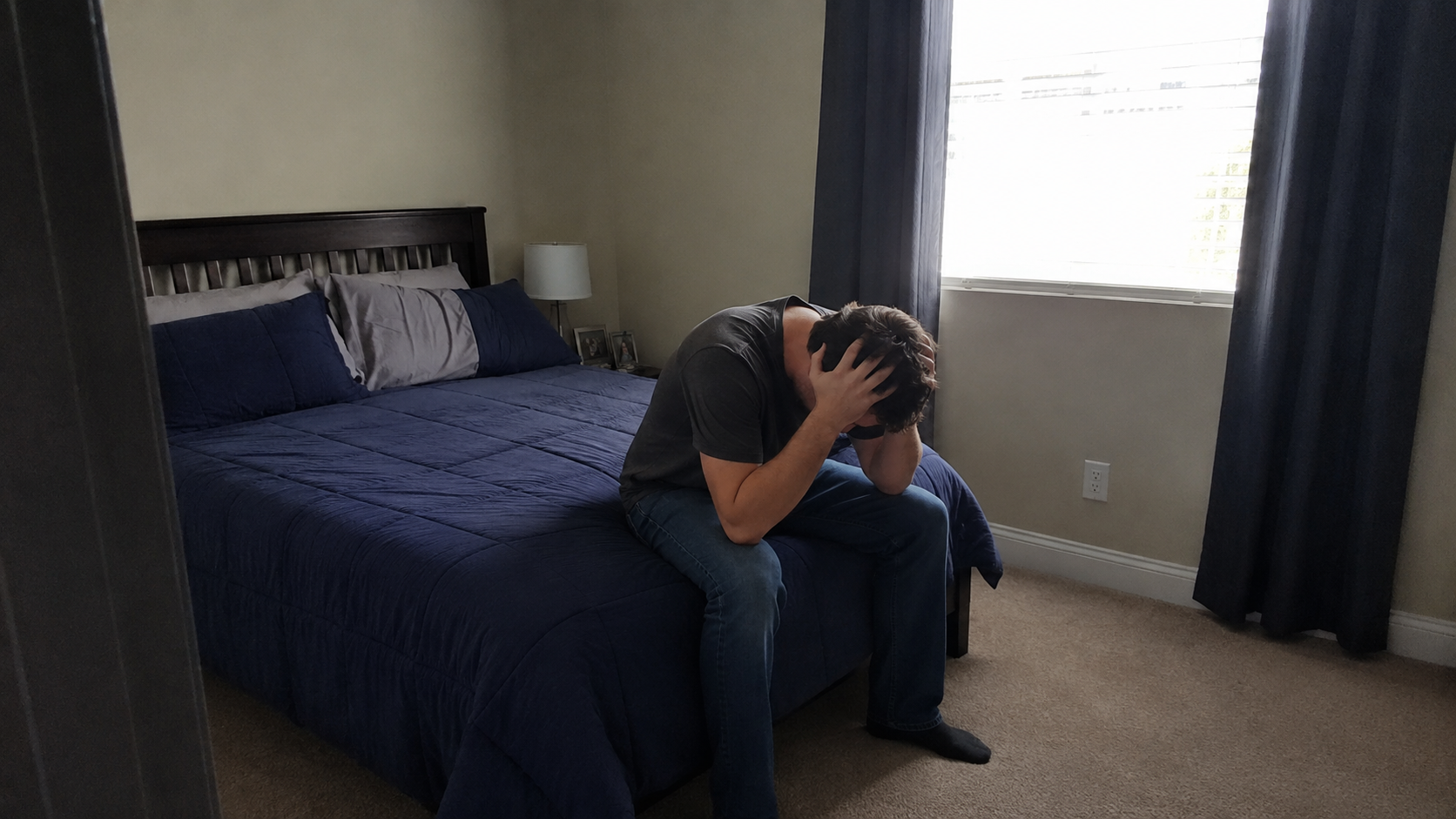
A sexless marriage is one of the loneliest experiences there is. Part of what makes it so hard is that it happens inside the one relationship that is supposed to protect you from loneliness, and part of it is that almost nobody talks about it. So you carry it quietly, and it wears on you in a way that is difficult to explain to anyone.
This is not a lecture about getting your spouse into therapy, and it is not a nudge toward the door. It is an honest look at what this pain actually is, why it hurts as much as it does, and what genuinely helps. And it is here to say, plainly, that you are not alone in it.
The pain is real, and it is bigger than sex
The first thing worth saying plainly is that what you are feeling is not an overreaction, and it is not really about sex, not only about sex anyway.
When physical intimacy disappears from a marriage, what goes with it is the sense of being wanted. Being desired by your partner is one of the ways people feel loved, valued, and chosen, and when that stops, it leaves a specific kind of emptiness that is hard to describe to someone who has not felt it. It is not just the absence of a physical act. It is lying next to someone you love and feeling completely alone. It is the quiet question of whether your partner still finds you attractive, still wants you, still sees you that way at all.
Over time, that question starts to answer itself in the worst way, even when the real answer might be more complicated. Rejection, or what feels like rejection, accumulates. Each time you consider making a move and stop yourself, or you try and it does not land, the next time gets harder. And slowly it stops being just about the bedroom and starts eroding something deeper: how you feel about yourself, whether you believe you are desirable, whether you feel loved at all. That erosion is the part that genuinely hurts, and it is why a sexless marriage can feel like it is taking something from you that you cannot easily name.
If you have felt all of that, you are not being dramatic. You are describing one of the more painful things a person can go through inside a committed relationship.
The resentment you do not want to admit
Here is the part most articles skip, because it is uncomfortable: along with the loneliness, there is often resentment. And the resentment is aimed at someone you may still love very much, which makes it feel terrible to carry.
You might feel angry at your partner for not wanting you, for not noticing how much this hurts, for changing the subject every time you try to talk about it, for seeming fine while you are falling apart. You might feel a flash of bitterness in ordinary moments, a coldness you do not like in yourself. And then, right behind the resentment, comes the guilt, because you know your partner is a whole person with their own reasons, their own struggles, and you do not want to be someone who keeps score or punishes them for it.
That combination, resentment tangled with guilt, is one of the heaviest parts of this whole experience, and almost no one says it out loud. So let it be said here: feeling resentful when a core need has gone unmet for a long time does not make you a bad person or a bad partner. It makes you human. The resentment is information. It is the part of you that knows something important is missing and is not willing to pretend otherwise. The goal is not to feel ashamed of it, but to understand what it is telling you and find a way to address the real need underneath it, rather than letting the bitterness harden.
How it got this bad
It usually does not happen all at once. It happens in a slow spiral that is worth understanding, not to assign blame, but so you can see it is a pattern rather than a verdict on you or your marriage.
It often starts small. Intimacy slows down for some ordinary reason, stress, exhaustion, a health issue, a rough patch, and at first nobody worries about it. But the conversation about it does not happen, because it is an awkward conversation and there never seems to be a good moment. The silence grows. One person hesitates to initiate because they are tired of being turned down, and the other reads that hesitation as disinterest, and both quietly withdraw to protect themselves. Each unspoken month makes the topic bigger and scarier to bring up, until it becomes the thing nobody mentions, sitting in the middle of the marriage.
None of that means your marriage is broken beyond repair, and none of it means you are unlovable. It means two people fell into a pattern that feeds itself, and patterns can be interrupted. That is genuinely the more hopeful truth underneath the pain: this is a dynamic, not a final judgment.
This is the same pattern that runs through what people call a dead bedroom, when it has set in long enough to feel like the new normal.
What actually helps
There is no switch that fixes this overnight, and anyone who promises one is selling something. But there are real things that help, and they are smaller and more within your power than they might feel right now.
The first is to name the feeling honestly to yourself, which you may have just done by reading this far. Putting words to it, this is loneliness, this is the ache of not feeling wanted, this is resentment I feel guilty about, takes some of the formless weight off. A feeling you can name is one you can begin to work with.
The next, when you are ready, is breaking the silence, gently. Not a confrontation, not a list of grievances, but a single honest moment where you let your partner see how you are actually feeling. Something closer to telling them you miss them and you have been lonely than telling them what they have done wrong. The goal of that first conversation is not to solve everything. It is just to stop being alone in it, to put the real feeling into the space between you instead of carrying it by yourself. It is worth knowing this is not only hopeful thinking: research on couples finds that open communication about sex is consistently tied to greater satisfaction and helps couples stay connected through difficult stretches. The guide on how to talk to your partner about desire walks through how to start that conversation in a way that opens it up rather than shutting it down.
It is worth being honest about something here, because false hope helps no one: sometimes you will open the door and your partner will not walk through it, at least not right away. They might get defensive, or brush it off, or not be ready. That is painful, and it does not mean you did it wrong. What it usually means is that the pattern is deep and one conversation will not undo it. It may take more than one attempt, or it may be the point where outside help becomes the honest next step. What it does not mean is that you are unlovable or that the situation is hopeless. The broader picture of how couples move through this is in the sexless marriage guide, which covers the longer arc.
When you need more than an article
Some of what comes with a long sexless marriage is heavier than relationship advice can hold, and it is important to say so directly.
If this is affecting your mental health, if you are not sleeping, if you feel persistently low, if your sense of your own worth has taken a serious hit, that is worth taking seriously and not carrying by yourself. A therapist can help, and it does not have to be couples therapy. You can see someone on your own, to work through what this has done to you and to think clearly about what you want, regardless of whether your partner is ready to engage. Talking to a trusted friend or family member can also break the isolation that makes this so much harder to bear.
Wanting support is not weakness, and it is not an admission that your marriage has failed. It is what a person does when they are carrying something heavy and they would rather not carry it alone. If the weight of this has started to feel like more than you can manage, please treat that as a real signal and let someone in, a professional, a friend, someone, rather than going through it in silence.
You are not alone in this
It is hard to believe when you are inside it, but this experience is far more common than the silence around it suggests. A great many marriages move through long stretches with little or no physical intimacy, and a great many people lie awake feeling exactly what you are feeling right now, convinced they are the only ones. They are not, and neither are you.
Feeling this way does not mean your marriage is doomed, and it does not mean something is wrong with you. It means you are someone who needs connection, which is one of the most human things there is, and you are not getting enough of it right now. That is a real problem, and real problems can be worked on. The pain you feel is not proof that things cannot change. Often it is the very thing that finally gets them to change, because it is the signal that something matters too much to keep ignoring.
How Couplewink fits
After a long silence, the hardest part is often just the first move. Both people may be waiting, each unsure of the other, each afraid of the rejection that has stung before. The first step toward connection can feel impossibly heavy.
Couplewink was built to make that first step lighter. Each partner privately shares what they are open to, and the app only surfaces a match when both people feel the same way. Nobody has to risk a move that might not land. Nobody has to guess. It is a quiet way to find out that the door is open on both sides, when neither of you has been able to say so out loud.
It is not a fix for everything in this article, and it does not replace the honest conversations or the support that some of this calls for. But when the silence has made the first move feel impossible, it can be a gentle way back toward each other.